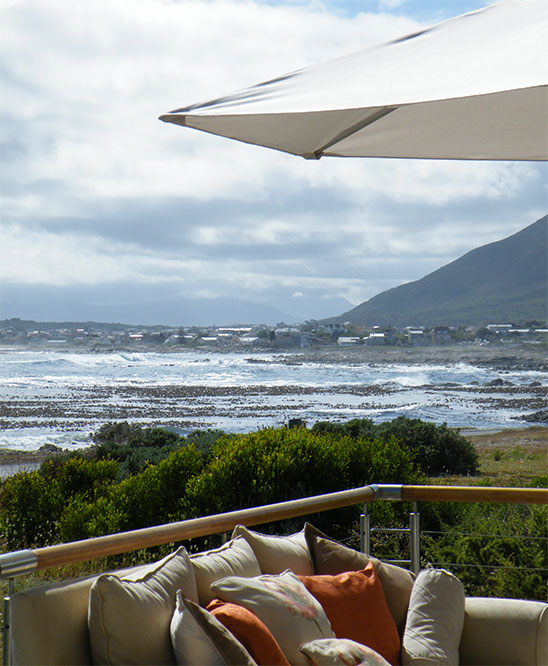
In a climate moderated by the sea, the coastal mountains of the Cape have one of the richest floras in the world. There is no other place on earth where so
many different species can be seen growing in such close proximity.
‘Fynbos’ (literally “fine leaf”) is the term given to this collection of plants that covers an area of less than 90 000 square kilometres (the size of
Portugal) and hosts 8 600 plant species. Roughly 70% are endemic to the area - that is, they are found nowhere else in the world. To put this
in perspective, the British Isles, three and a half times larger, have only 1 500 plants and less than 20 of those are endemic.

So special is the Cape Floral Kingdom that it has been designated as one of the earth's six plant kingdoms and is in quite a league of its own. It
contains 526 of the world's 740 erica species, 96 out of the world's 160 gladiolus species, 69 proteas out of 112, and over 600 heaths, with
just 26 in the rest of the world. Many of these are threatened with extinction.
Nearby Nature Reserves
Hermanus has its own nature reserve at Fernkloof, with a 60 km network of graded trails which can be explored on foot, on horseback, mountain-bike or in a 4x4.
These provide the opportunity for people of all fitness levels to go out and enjoy some exercise and fresh air.
The Harold Porter Nature Reserve (40 km from Hermanus) on the scenic coastal drive to Cape Town, stretches from the top of the Kogelberg mountain range to
within 10m of the sea, encompassing a whole river system. Ten hectare has been cultivated as a magnificent garden with streams, ponds, and
winding pathways in an exquisite fynbos setting while the remainder is managed as a natural reserve.
The fynbos environment has a complement of animals. Grey rhebok, Cape grysbok, klipspringer, baboon, mongoose and dassie are present in small numbers.
Although not as rich in bird-life as other areas in South Africa, 92 bird species have been recorded. Species most likely to be seen include
the Cape Sugar Bird, Sunbirds and the Rock Thrush. Raptors include the Jackal Buzzard and Black Eagle.